


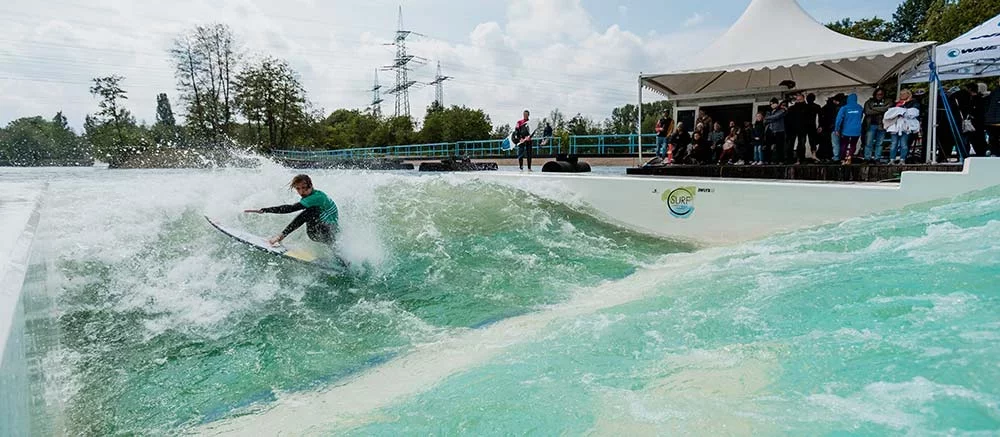
This weekend, the first official German Rapid Surfing Championship took place in one of Germany’s most famous waterski facilities, in Langenfeld near Cologne. But what is Rapid Surfing anyway?
It means surfing on a so-called “standing wave” that is artificially created and can therefore be surfed regardless of the tides or swell. A “perfect” wave that is available at almost any time at the push of a button.
And where does the name come from? The inspiration for the name comes from the most famous rapids in the world - the Eisbach in Munich. Rapid is simply the English translation of the word rapid and, in the context of surfing, is an international term that describes river surfing and surfing on standing and moving artificial waves.
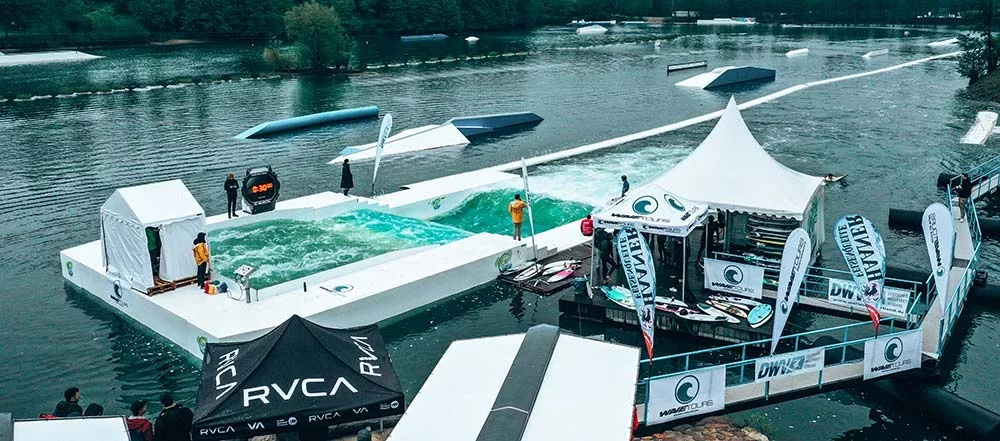
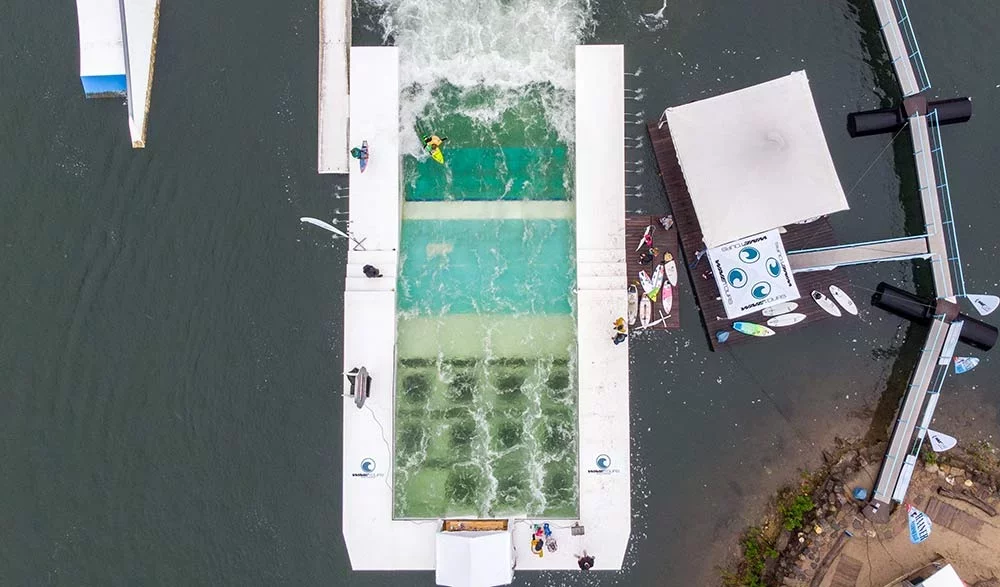
Back to the championship, which was held on exactly this wave: On Saturday, Germany’s best rapid surfers competed against each other in the Open Woman, Open Men, Juniors and Ü35 Masters classes and got the best out of themselves and the wave.
Our team riders Marc Piwko and Lennard Weinhold were also there and started together with 42 other participants. Marc is actually at home on the sea and knows that the difference is mainly “that in rapid surfing you surf the wave more sideways, while in the sea it’s more about surfing top to bottom.”
If you’re hearing the name Lennard Weinhold for the first time, you should remember it. The 18-year-old is a specialist on the standing wave and is now an official team rider for Wavetours. Lenni already won the boot Düsseldorf Wave Masters in 2019. So he knows his stuff and explains to us that rapid surfing is a combination of two sports: skating and sea surfing - although sea surfing is obviously much more relevant because you try to imitate the style and turns of sea surfers as best as possible. The trick you need to win, however, comes from skating.”
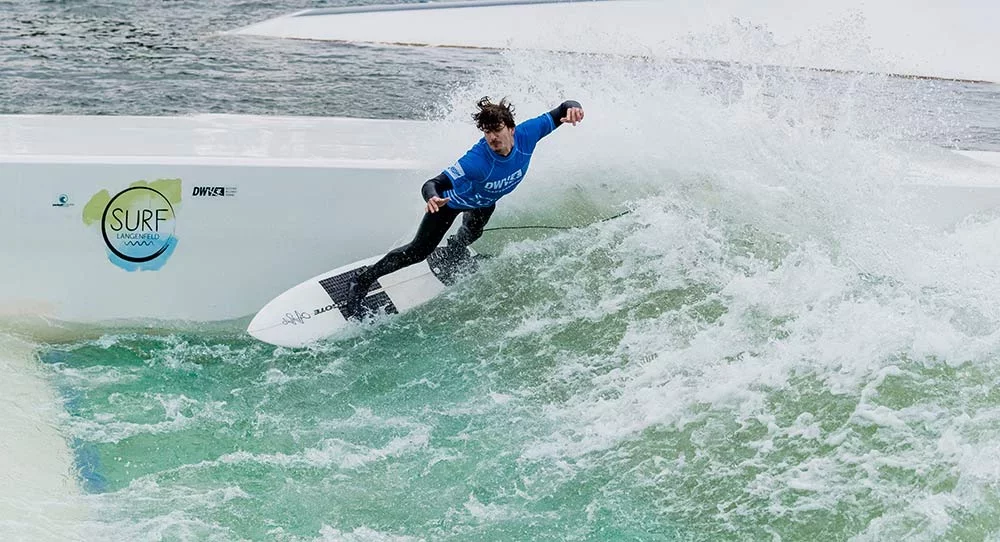
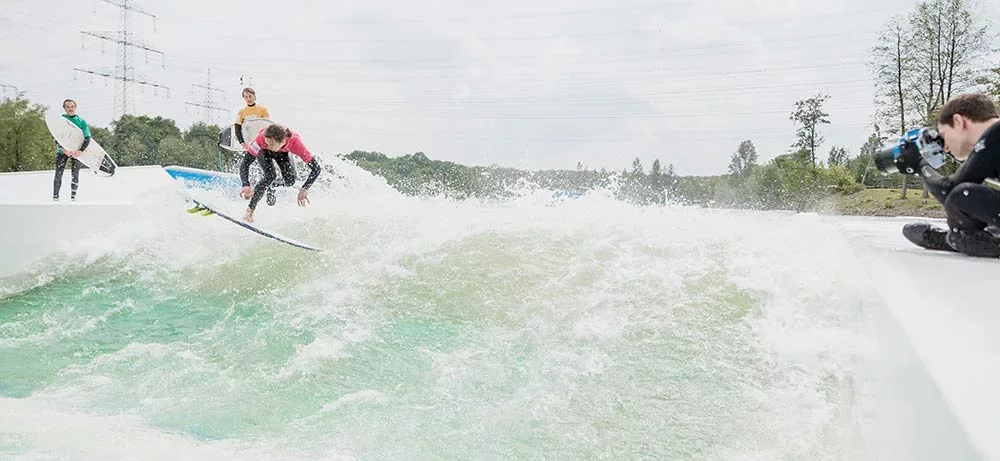
The participants had to impress the DWV judges with a varied, spectacular and flowing performance on the wave. This includes lines and their depth, i.e. how you ride the wave (in height and width). A good run should also include spectacular maneuvers and tricks. A trick is any change in direction of more than 180 degrees, and an aerial maneuver is a trick in which the board completely leaves the water surface. The overall picture also assessed the intensity of the maneuvers (how high the jump is and how technically difficult it is to perform) and the combination of the individual tricks.
For Marc, the championship ended in the third round. A huge success when you consider that this is only the fifth time he has surfed a standing wave. “Rapid surfing is something I have to get used to because the water in the river pushes you out of the wave the whole time, instead of forwards like in the sea, in exactly the opposite direction,” Marc told us after his last heat. Lenni, on the other hand, lived up to his role as favorite and made it to the final. Unfortunately, he had to admit defeat to Sebastian Steinberg and Nicolas Marusa and ended up in third place.
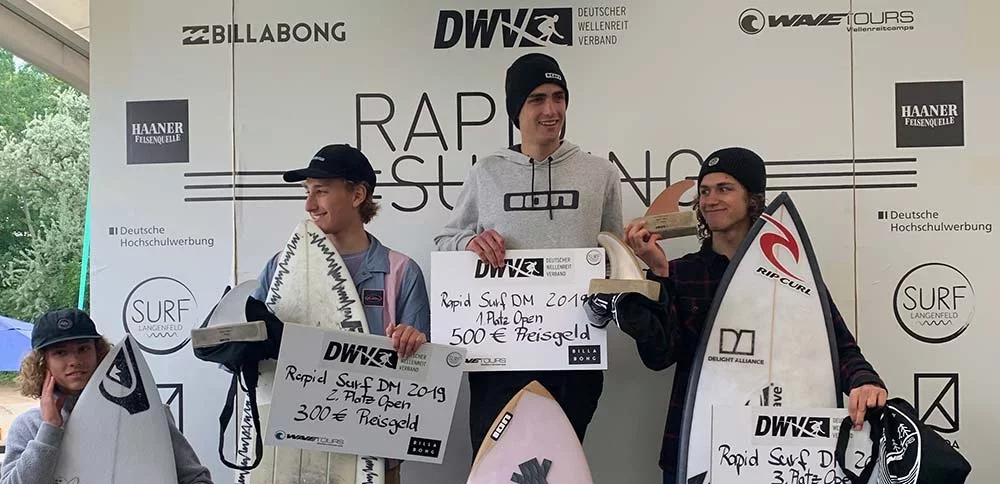
Janina Zeitler and Sebastian Steinbeck won the Open Class and thus secured the first official victory in Rapid Surfing. All those who placed in the Open Classes were awarded cash prizes totaling €2000, which were made possible by the main sponsors Billabong, WAVETOURS and Haaner Felsenquelle.
Overall, it was a great event with a great atmosphere and many impressive skills. Next, the sea awaits our surfers again, as the adh-Open in Seignosse is just around the corner in less than 4 weeks.